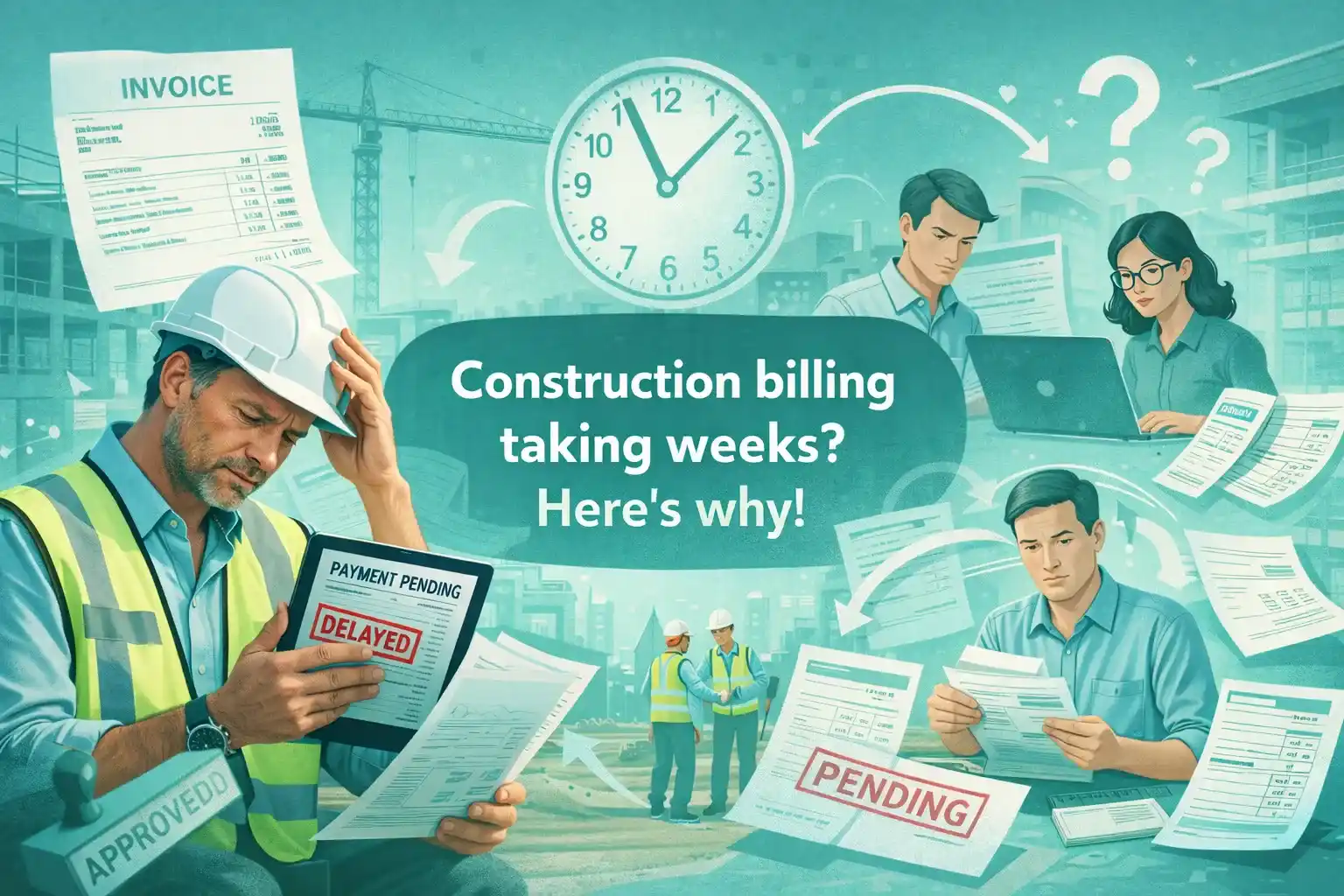
We have all been there: On a busy construction site, the work is complete, the bill is submitted, and certification takes weeks.
The site team knows the progress is real. However, the finance team can’t release the money until they are 100% sure. This is where construction billing breaks down. It’s not because you didn't do the job; it’s because proving you did it takes too long.
Manual checks and spreadsheets confuse everyone and hurt your cash flow. We need a better way. Progress-linked billing changes the game by using real data to trigger payments.
In this blog, we explore why construction billing gets stuck and how to leverage the best construction software to streamline construction progress payments.
Why is billing one of the most sensitive processes in construction
Billing touches the most sensitive nerve in any project: money.
Construction billing directly impacts cash flow, and cash flow directly impacts confidence. When payments are delayed, contractors feel the pressure immediately. Subcontractor billing slows down next. Suppliers become cautious. Site productivity can drop even when schedules look fine.
Unlike schedule delays, billing delays are personal. They affect salaries, vendor payments, and working capital. That is why disputes around construction billing escalate faster than most other issues.
Accuracy and trust are critical. If either is missing, approvals slow down naturally.
How manual certification works today
On most projects, execution and billing still run on parallel tracks. Progress is captured through measurements, daily reports, photos, and site logs. Billing comes later. Teams manually pull this information together to prepare bills.
During RA bill processing, quantities are rechecked, rates are compared against BOQs, and deductions are recalculated.
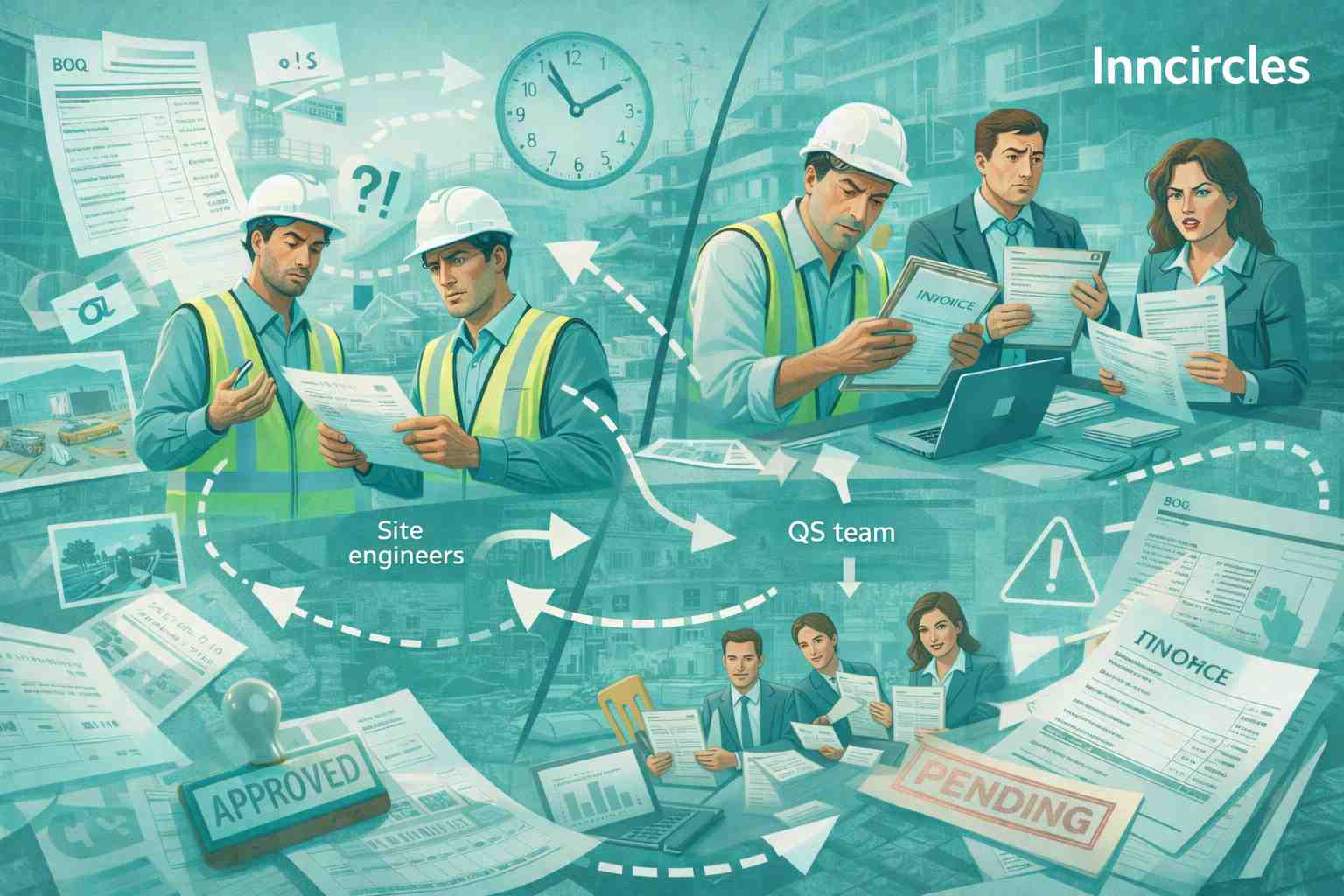
This process depends heavily on people and paperwork. Clarifications move back and forth. Each review adds time. Even when work is complete and approved on site, construction billing waits for reconciliation.
The limitations of manual certification
Manual certification creates delays because it is built on interpretation rather than data.
Different teams may read progress differently. Quantity reconciliation often happens late. Standards vary from project to project. All of this increases effort during RA bill processing.
Here is a quick comparison between manual and progress-linked billing
Aspect | Manual certification | Progress-linked billing |
Basis of billing | Billing is prepared after progress, using reports and interpretation | Billing is directly tied to verified execution data |
Progress verification | Relies on subjective assessment by individuals | Relies on system-verified measurements and approvals |
Quantity reconciliation | Happens late during RA bill processing, often through clarifications | Quantities are reconciled continuously as work progresses |
Standards across projects | Varies by project, consultant, and team | Follows consistent, system-driven standards |
Administrative effort | High manual effort across the site, QS, and finance | Lower effort due to automated data flow |
Scope for ambiguity | High, leading to disputes in construction billing | Low, with clear linkage between work and payment |
Impact on cash flow | Unpredictable due to delays and rework | More predictable and stable payment cycles |
Support for budget vs actual tracking | Updated after billing, limiting visibility | Updated alongside execution, strengthening budget vs actual tracking |
The impact becomes more visible as projects grow.
Subcontractor billing inconsistencies affect the main bills. Small errors take days to resolve. Over time, construction billing becomes slower, even when teams are experienced.
What progress-linked billing changes
Progress-linked billing changes the sequence of events.
Instead of measuring first and reconciling later, progress billing connects billing directly to verified execution. Activities are linked to quantities. Quantities are linked to payments. Approvals are based on actual data instead of assumptions.
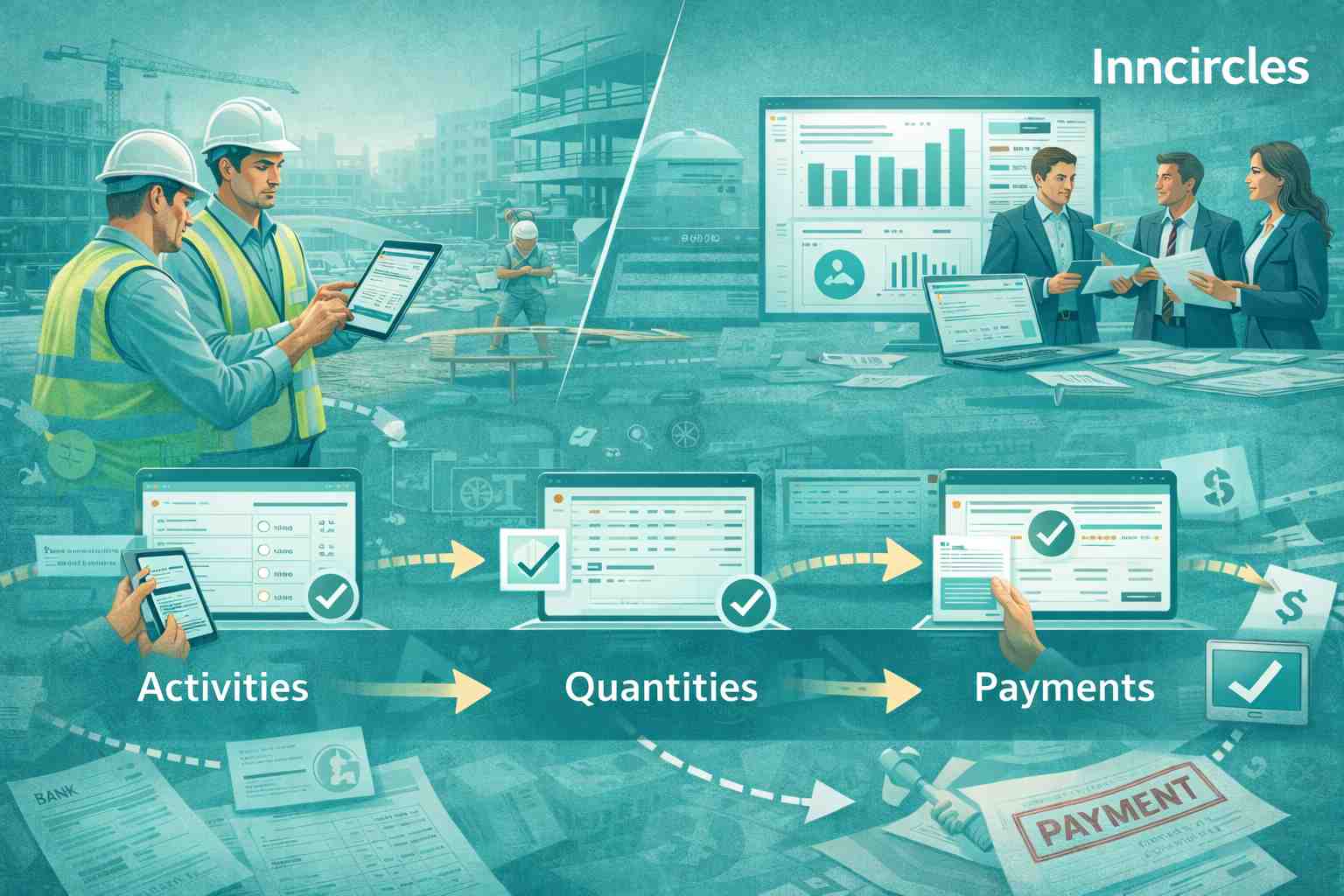
This reduces confusion and speeds up certification. With progress billing, teams spend less time explaining numbers and more time approving them.
As a result, construction billing starts moving closer to site progress.
Why progress-linked billing requires strong execution data
Progress-linked billing only works when execution data is reliable.
Measurements need to be captured at the activity level. Approvals must be time-stamped. Planned work, actual progress, and billable quantities must stay aligned. This alignment also supports budget vs actual tracking, which is critical for financial control.
When budget vs actual tracking is up to date, finance teams approve bills with confidence. When it is delayed or unclear, billing slows down. Strong execution data keeps construction billing predictable.
Reducing commercial risk through connected systems
Disconnected systems create uncertainty. Connected systems reduce it.
When execution, cost, and billing data flow together, disputes naturally reduce. Subcontractor billing becomes easier to verify. RA bill processing becomes more consistent. Budget vs actual tracking stays current.
This is where construction software makes a difference. By connecting site data with commercial workflows, construction software reduces manual effort and improves control. Over time, it brings stability to construction billing across projects.
When to transition from manual to progress-linked billing
Manual processes may work on small jobs. They struggle with complex ones.
Projects with multiple contractors, tight cash flow cycles, or frequent billing disputes benefit the most from progress-linked approaches. Owners who want transparency and control also look toward systems that support progress billing and real-time budget vs actual tracking.
When manual certification starts slowing payments and increasing friction, it is a clear sign to change.
The problem
In many projects, execution and billing operate separately. Manual certification slows payments. Data reconciliation consumes time. Trust becomes dependent on individuals instead of systems. All of this makes construction billing unpredictable.
The real issue
Billing is not slow because work is not happening.
It is slow because execution data is not connected to payment workflows, RA bill processing, and approvals.
The solution
Modern projects benefit from progress billing supported by connected platforms.
With the right construction invoicing software, execution data flows directly into construction billing. Measurements, approvals, and schedules stay aligned. Certifications rely on data rather than judgment. Payments become faster, fairer, and more predictable.
Inncircles enables this by unifying execution tracking, measurement, and commercial workflows. The result is smoother subcontractor billing, stronger budget vs actual tracking, and billing that reflects what is actually happening on site.
From field execution to financial clearance:
In an industry where project momentum depends on liquid working capital, you cannot afford to let RA bill processing lag behind on-site production. When your site progress is physically evident but remains uncertified, the issue isn't your performance; it is your data pipeline.
Inncircles’ construction software acts as the single source of truth, automatically aligning field measurements with your contract’s bill of quantities. By integrating subcontractor billing and budget vs actual tracking into one live environment, we eliminate the guesswork that causes certification delays. With Inncircles, your construction invoicing finally moves at the same pace as your project schedule.